When a Logo Cover-Up Became the Biggest Marketing Story of the World Cup
At major sporting events, official sponsorship is everything.
FIFA’s clean-stadium approach protects the exclusive rights of approved partners by restricting unauthorised branding around match venues and tournament areas. It is designed to give sponsors the visibility they have paid for.
But during the 2026 FIFA World Cup, one of the biggest marketing conversations was not about the official sponsors.
It was about the brands FIFA tried to hide.
From stadium signs and ketchup bottles to headphones worn by players, non-sponsor brands were covered, taped over or removed. Instead of disappearing, several brands turned those restrictions into highly shareable campaigns.
The result was a clear marketing lesson: sometimes, being restricted creates a stronger story than paying for attention.
The Rule: No Unofficial Branding
FIFA’s commercial rules are built around sponsor exclusivity. Stadiums and surrounding event areas are expected to be commercially clean, limiting exposure for brands that are not official tournament partners.
For stadiums with major naming-rights partners, this created a challenge.
Venues such as Levi’s Stadium and Gillette Stadium had to temporarily remove or obscure their branding during the tournament. The rules extended beyond stadium signs, reaching into media areas, product labels and player gear.

Levi’s Turned a Cover-Up Into a Campaign
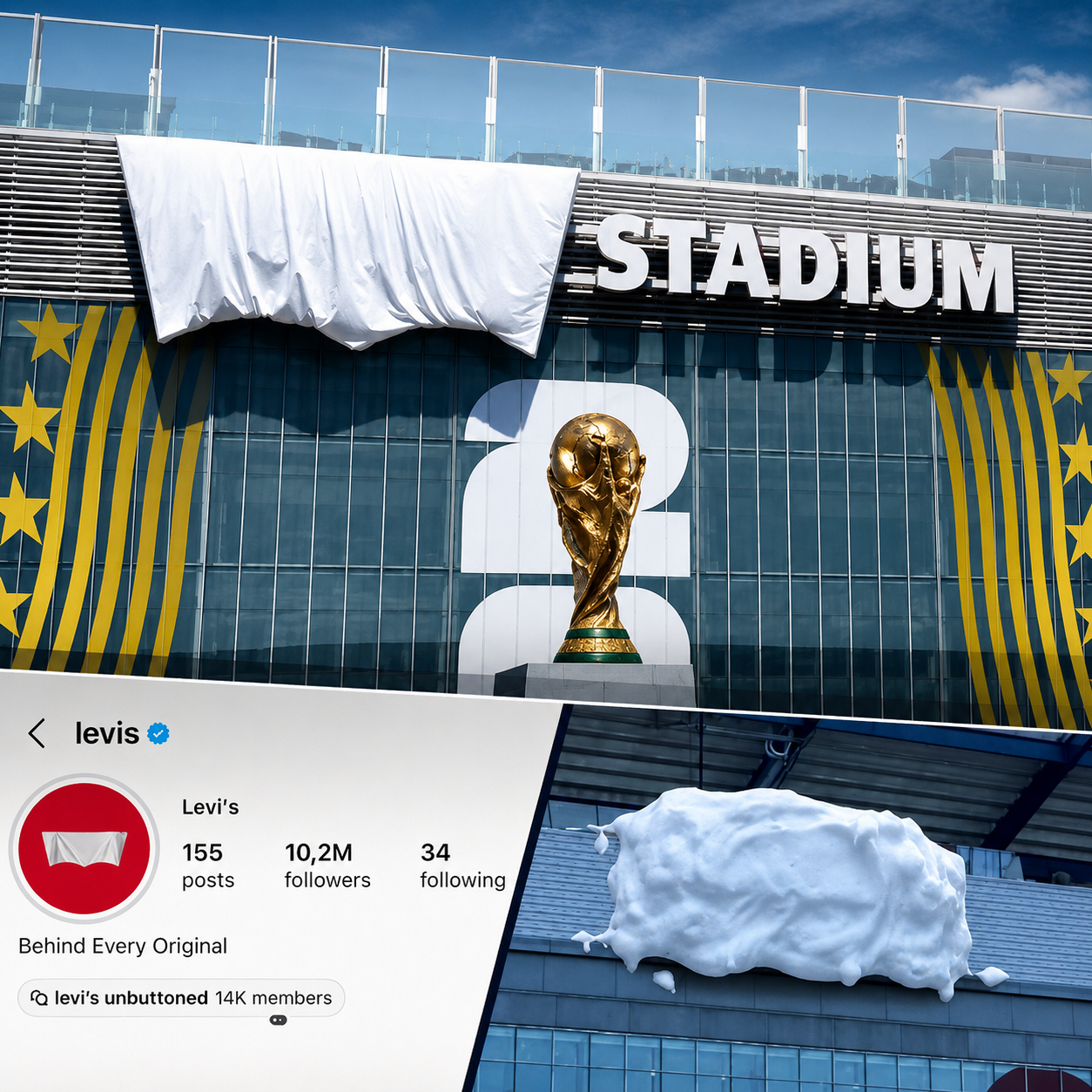
Levi’s Stadium became one of the clearest examples of how powerful brand assets can work even without a visible logo.
The Levi’s name was covered with a large white tarp, but the distinct Batwing-shaped silhouette remained recognisable. Rather than treating the cover-up as a problem, Levi’s used the moment across social media and turned the restriction itself into the campaign.
The lesson is simple: a strong brand does not always need its name visible.
When people can recognise your identity through shape, colour, tone and visual consistency, even a partially hidden logo can become instantly memorable.
Heinz Made “Unofficial” Feel More Valuable
Heinz faced a similar situation when its product branding was obscured in tournament areas.
Instead of ignoring the moment, Heinz leaned into it with blacked-out, logo-free “Unofficial Stadium Ketchup” creative. The campaign made the restriction part of the product story, proving that recognisable packaging can still communicate a brand even when the name is hidden.
This is a strong example of reactive marketing done well.
The brand did not fight the rule. It used the rule as creative material.
Gillette Turned Tape Into a Talking Point
At Gillette Stadium, FIFA’s branding restrictions reportedly required Gillette branding across the venue to be covered, including logos on thousands of seats. Gillette then used the situation in its own social content, playing with the idea of covering branding through shaving foam.
The campaign showed how a simple visual idea can turn an operational inconvenience into a memorable piece of content.
People did not share the campaign because it was a traditional advertisement.
They shared it because it was unexpected, timely and easy to understand in seconds.
Beats Made a Small Detail Feel Massive
The restrictions were not limited to stadium branding.
Germany player Jamal Musiala was seen with tape covering the Beats logo on his headphones before a World Cup match because Beats was not an official tournament sponsor. The small visual detail quickly became part of the wider conversation around FIFA’s strict branding controls.
This is a reminder that audiences notice details.
A strip of tape over a logo may seem minor, but in a high-attention environment like the World Cup, it can become a global social-media moment.
Instead of ignoring the moment, Heinz leaned into it with blacked-out, logo-free “Unofficial Stadium Ketchup” creative. The campaign made the restriction part of the product story, proving that recognisable packaging can still communicate a brand even when the name is hidden.
This is a strong example of reactive marketing done well.
The brand did not fight the rule. It used the rule as creative material.
The Streisand Effect in Marketing
The restrictions were not limited to stadium branding.
Germany player Jamal Musiala was seen with tape covering the Beats logo on his headphones before a World Cup match because Beats was not an official tournament sponsor. The small visual detail quickly became part of the wider conversation around FIFA’s strict branding controls.
This is a reminder that audiences notice details.
A strip of tape over a logo may seem minor, but in a high-attention environment like the World Cup, it can become a global social-media moment.
Instead of ignoring the moment, Heinz leaned into it with blacked-out, logo-free “Unofficial Stadium Ketchup” creative. The campaign made the restriction part of the product story, proving that recognisable packaging can still communicate a brand even when the name is hidden.
This is a strong example of reactive marketing done well.
The brand did not fight the rule. It used the rule as creative material.