Core Web Vitals and User Experience: Why Website Performance Matters for SEO
A beautiful website is not enough to create a successful digital presence
A beautiful website is not enough to create a successful digital presence.
Your website also needs to load efficiently, respond smoothly to interactions and remain visually stable while users browse. When a website is slow or difficult to use, visitors may leave before they discover your products, services or content.
This is where Core Web Vitals and overall user experience become important.
Google uses Core Web Vitals as part of its ranking systems, while also making it clear that strong Core Web Vitals scores alone do not guarantee top search rankings. Relevance, helpful content and overall page experience continue to matter.
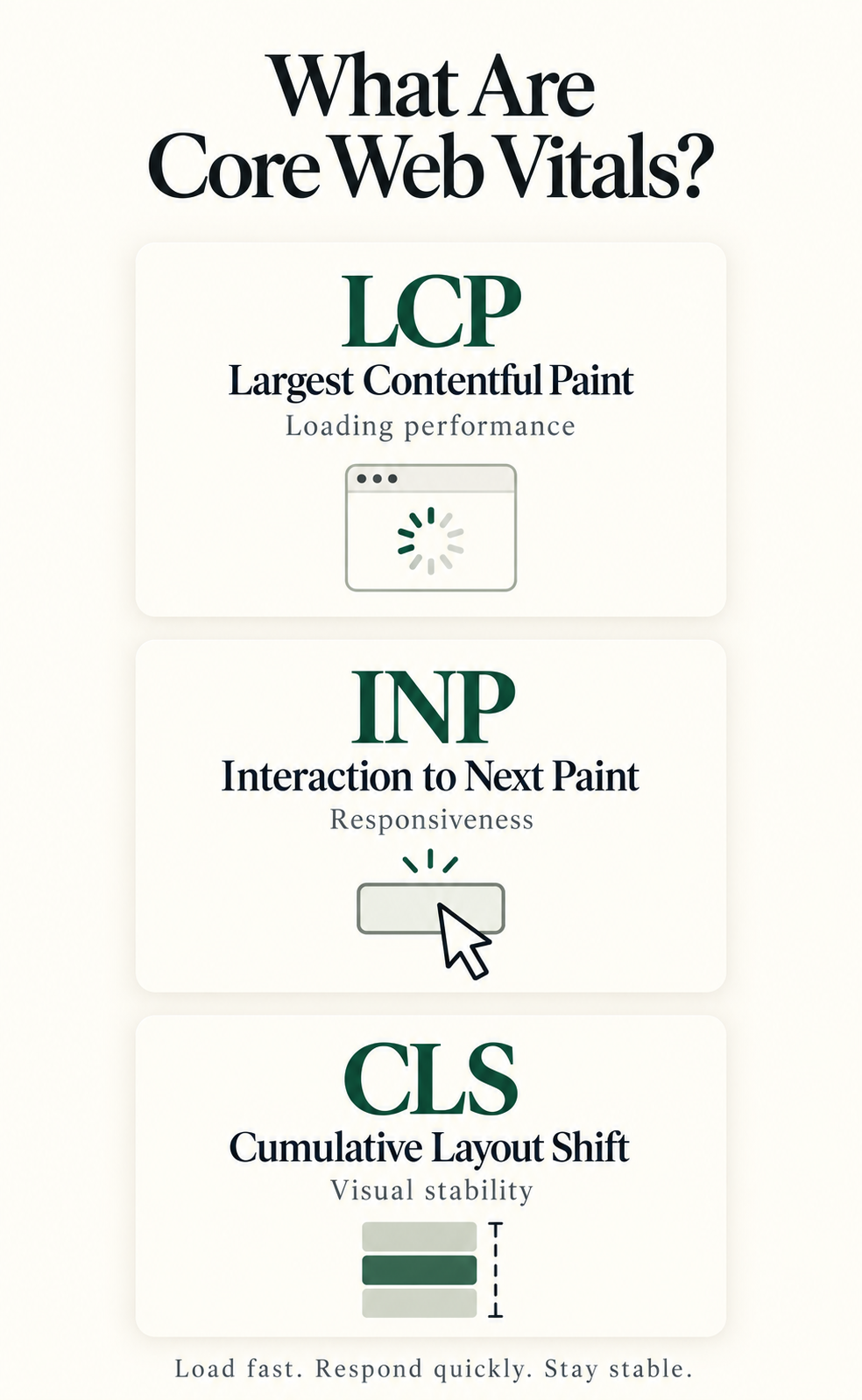
What Are Core Web Vitals?
Core Web Vitals are a set of metrics designed to measure important aspects of real-world user experience on a webpage.
The current Core Web Vitals are:
- LCP – Largest Contentful Paint: Measures loading performance and how quickly the main content becomes visible.
- INP – Interaction to Next Paint: Measures how responsive a page is when users interact with it.
- CLS – Cumulative Layout Shift: Measures unexpected movement of content while a page is loading.
Google replaced First Input Delay (FID) with INP as a Core Web Vital in 2024.
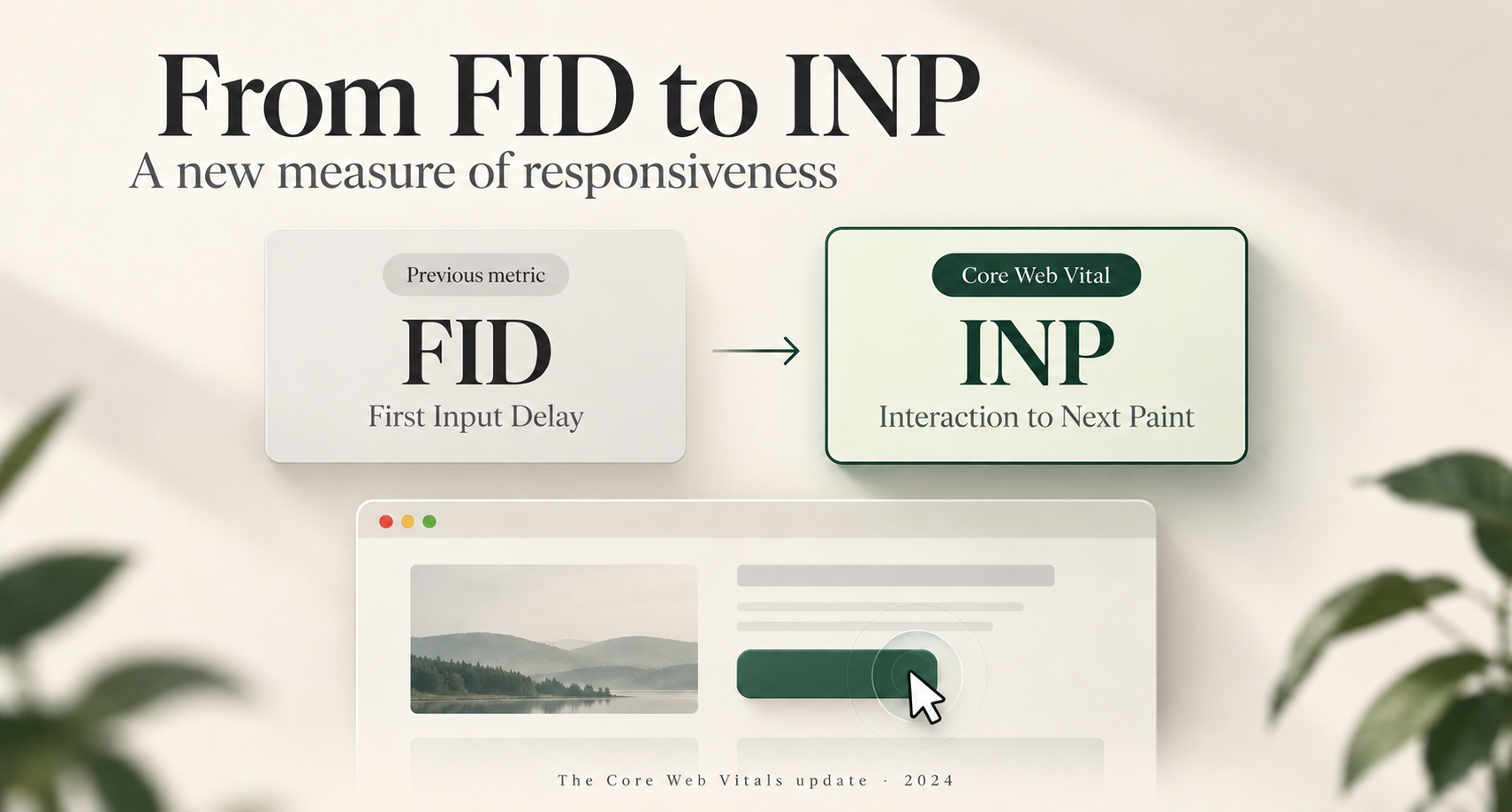
These metrics help businesses understand whether their websites provide a smooth experience for visitors.
Why Website Speed Matters
Imagine clicking on a website and waiting several seconds for the main content to appear.
You may close the page and look for another option.
This is particularly important for businesses that depend on their websites for:
- Lead generation
- Online enquiries
- Product sales
- Service bookings
- Contact requests
- Brand discovery
A faster website can make it easier for visitors to find information and complete important actions.
However, website performance is not simply about making a page load as quickly as possible. The entire experience matters.
User Experience Goes Beyond Speed
A fast website can still provide a poor experience.
For example, visitors may struggle if:
- The navigation is confusing
- Text is difficult to read
- Buttons are hard to find
- Pages are not mobile-friendly
- Pop-ups interrupt the content
- Images shift while the page loads
- Forms are complicated
- Important information is buried
Google’s page-experience guidance recommends looking at the overall experience rather than focusing on only one or two metrics. It highlights factors such as Core Web Vitals, secure connections, mobile usability and avoiding intrusive elements.
The Three Core Web Vitals Explained
- LCP – Loading Performance
LCP focuses on the loading experience.
It looks at how quickly the largest visible content element appears in the viewport.
This could be:
- A large image
- A video poster
- A headline
- A prominent content block
A poor LCP can make a page feel slow, especially when the most important content takes too long to appear.
Businesses can improve loading performance by optimising large images, reducing unnecessary resources, improving server response times and reviewing how content is delivered.
- INP – Interaction Responsiveness
A website should not only load quickly. It should also respond properly when visitors interact with it.
INP measures how responsive a page is to user interactions during a visit.
Examples of interactions include:
- Clicking a button
- Opening a navigation menu
- Selecting an option
- Submitting a form
- Using interactive features
If a visitor clicks something and the page appears unresponsive, the experience can quickly become frustrating.
- CLS – Visual Stability
Have you ever tried clicking a button only for the page to suddenly move?
That is the type of problem CLS helps identify.
Unexpected layout shifts can happen when images, advertisements, fonts or other elements load without reserving the required space.
Improving layout stability makes the website feel more predictable and easier to use.
How Core Web Vitals Connect With SEO
SEO is no longer just about keywords and backlinks.
Modern search optimisation also involves creating a website that is useful and accessible to real users.
Google states that Core Web Vitals are used by its ranking systems. At the same time, Google also explains that achieving good Core Web Vitals does not automatically result in higher rankings.
This is an important distinction.
A website should not chase a perfect technical score while ignoring:
- Search intent
- Content quality
- Relevance
- Website structure
- Internal linking
- Mobile usability
- Accessibility
- Brand trust
- Conversion experience
The objective should be to create a better website overall.
Mobile Experience Matters
A large proportion of website traffic comes from mobile devices, making mobile experience an important consideration for businesses.
A mobile-friendly website should have:
- Easy-to-read text
- Responsive layouts
- Clear navigation
- Tap-friendly buttons
- Properly sized images
- Fast-loading pages
- Simple forms
A website that looks excellent on a desktop but becomes difficult to use on a smartphone can lose potential customers.
How to Improve Website Performance
Businesses can take several practical steps to improve website performance.
Optimise Images
Large, uncompressed images can increase page weight and slow down loading.
Use appropriately sized images and modern formats where suitable.
Reduce Unnecessary Code
Unused CSS and JavaScript can add unnecessary work for browsers.
Regular technical audits can help identify resources that can be removed or optimised.
Improve Server Performance
Improve Server Performance
Server response time can affect how quickly a website begins loading.
Businesses should review hosting, caching and server configuration when performance issues are identified.
Use Browser Caching
Caching allows certain resources to be reused rather than downloaded repeatedly, which can improve performance for returning visitors.
Review Third-Party Scripts
Chat widgets, analytics tools, advertising scripts and other third-party resources can affect website performance.
How to Measure Website Performance
Businesses can use tools such as Google PageSpeed Insights, Lighthouse and Google Search Console to identify performance opportunities. Google specifically recommends these resources as part of evaluating page experience.
Regular monitoring is important because website performance can change after:
- Adding plugins
- Uploading large images
- Installing tracking tools
- Changing themes
- Adding new features
- Updating website code
A website that performs well today can develop performance issues after future updates.
Don’t Optimise Only for Google
One of the biggest mistakes businesses can make is treating Core Web Vitals purely as an SEO checklist.
The real objective should be improving the experience for people.
A technically optimised website that has confusing messaging will not necessarily generate more business.
Similarly, a beautiful website with poor performance can frustrate visitors.
The strongest approach combines:
Performance + UX + Content + SEO + Conversion Strategy
Website Performance and Conversions
Website performance can also influence the overall customer journey.
Consider a potential customer searching for a service.
They find your website, click through and encounter a slow-loading page. They then struggle to find the service information and have difficulty locating the enquiry form.
Even if the website ranks well, the experience may not lead to an enquiry.
That is why SEO should not stop when someone reaches your website.
Core Web Vitals are an important part of modern website optimisation, but they are only one component of a successful SEO and user-experience strategy.
Businesses should focus on creating websites that are:
Fast. Responsive. Stable. Mobile-friendly. Useful. Easy to navigate.
Good technical performance can support a better experience, but businesses should avoid treating a perfect score as the ultimate SEO goal. Google itself emphasizes that strong Core Web Vitals do not guarantee top rankings and that overall page experience and helpful content matter too.
At Kreativefolio, we combine website design and development, SEO, GEO, creative strategy and digital marketing to help businesses build digital experiences that are designed not only to attract visitors, but also to turn those visitors into meaningful business opportunities.