Andromeda 2.0: Your Ads Are Now Your Targeting
If your Meta ads have felt unpredictable this year, with winning ad sets that suddenly stall, CPMs that swing and “proven” audiences that stop delivering, you’re not imagining it.
The engine under Facebook and Instagram ads has been rebuilt. Most of the industry now calls the latest phase Andromeda 2.0. Meta doesn’t use that name itself, but it’s useful shorthand for what has changed in 2026. The short version is that the creative you upload now does most of the targeting work.
Here’s what changed, why it matters, and what we’re doing about it for our clients across the UAE, GCC, UK and US .
First, what is Andromeda?
Every time someone opens Instagram or Facebook, Meta has to pick one ad out of tens of millions. It does this in three steps:
- Retrieval: narrow millions of eligible ads to a few thousand candidates
- Ranking: score those candidates for this person, right now
- Auction: pick the winner
Andromeda is the retrieval step. It decides which ads even get a chance to compete. Meta announced it in December 2024, and it was fully rolled out to advertisers by around October 2025. Meta says the new system allows models roughly 10,000x more complex than before at that first stage.
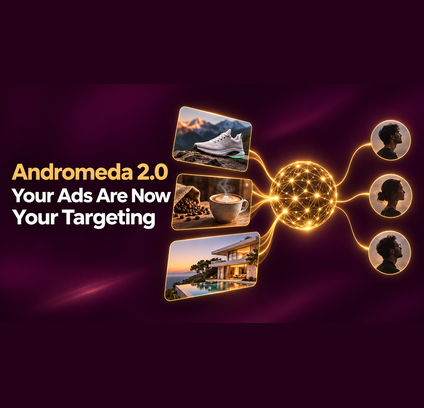
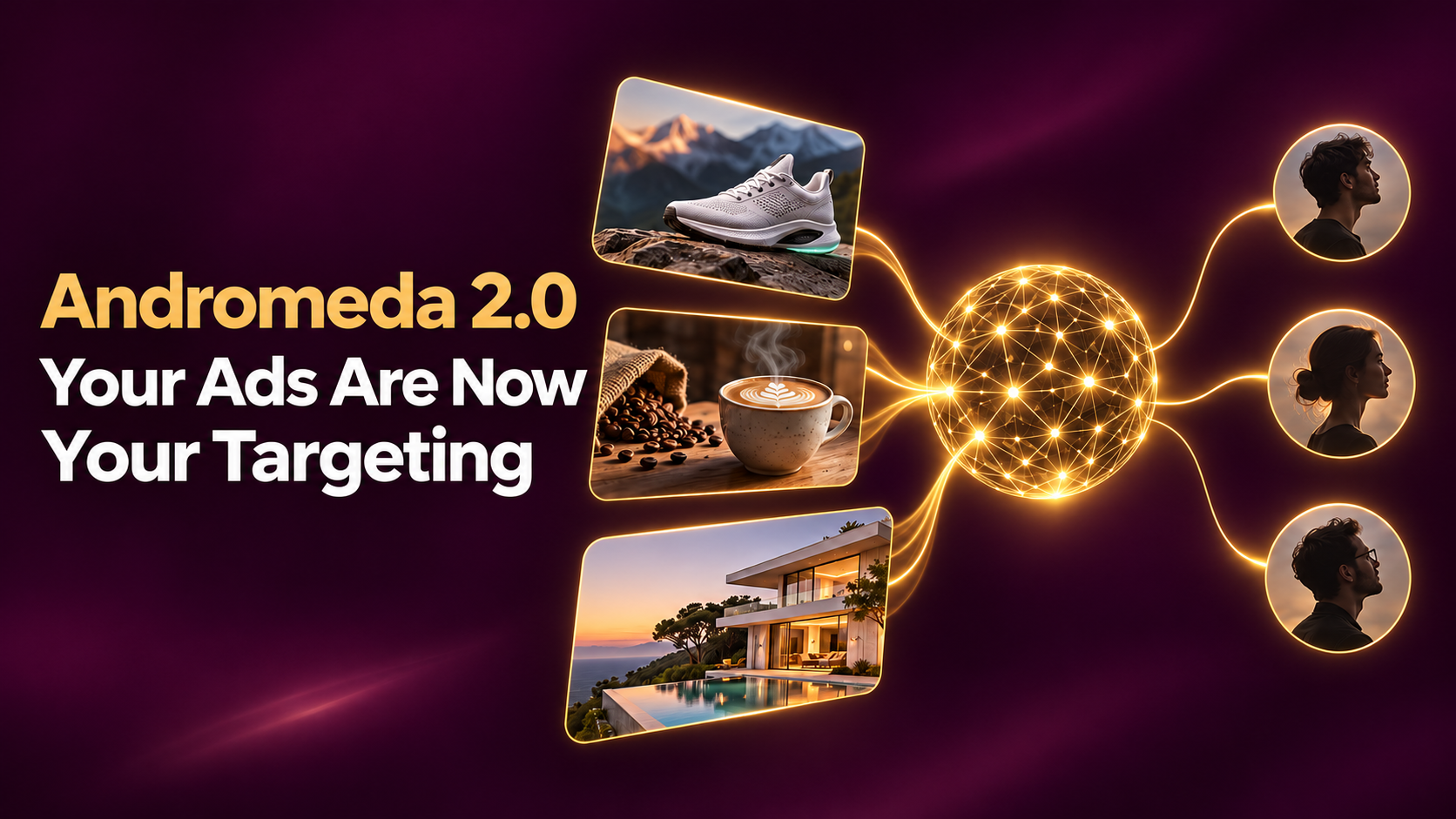
In plain terms, Andromeda reads your ad, including the visuals, the message and the format, and works out who it’s for. If your creative is weak or repetitive, it never makes the shortlist, no matter how good your audience settings look.
So, what makes it “2.0”?
The original Andromeda was a hardware and infrastructure upgrade. The 2026 updates are about intelligence. Here are the milestones that matter:
- Early 2026: Meta said Andromeda now runs across Nvidia, AMD and its own MTIA chips, nearly tripling compute efficiency. More compute means more ads evaluated, more precisely.
- July 2026: Meta’s CFO confirmed the company had deployed its first generative model inside the ads retrieval system, with “notable improvements in ads performance.” Retrieval is moving from matching patterns to actually understanding ads and people.
- October 2026: Meta reported that GEM, its large ranking model that scores the candidates Andromeda returns, delivered an 18.9% conversion improvement across its surfaces.
- October 2026: Meta opened per-creative audiences to Marketing API partners. Advertisers can now attach an age range and gender to individual creatives inside one ad set, so you tell the system who each creative is for instead of splitting ad sets.

- Creative is the new targeting. Narrow interest stacks and dozens of tiny ad sets work against the system now. Broad targeting plus strong, varied creative lets Andromeda find buyers you would never have defined manually.
- “Variations” aren’t diversity. Changing the button colour, the CTA or the first two seconds of the same video doesn’t give the system new options. To Andromeda, near-identical ads look like one ad. Real diversification means different concepts, angles, personas and formats.
- Volume matters, but only meaningful volume. The old rule of 3 to 5 ads per ad set is outdated. Many advertisers now run 15 to 50 ads in a single broad ad set, but each one has to earn its place with a distinct idea.
- Simpler structure, deeper strategy. Campaign setup gets simpler, with fewer campaigns, broader ad sets and more Advantage+. The real thinking moves into the creative brief.
- Weak creative gets punished faster. Andromeda doesn’t make bad ads good. It simply shows weak creative to broader, less qualified people, and your costs climb.
The GCC angle: where we see the biggest opportunity
- Bilingual creative is real diversification. Arabic-first and English-first ads aren’t translations of each other. They’re different conversations with different audiences. Build them as separate concepts, not subtitled copies.
- Multicultural audiences, multiple personas. A single Dubai campaign may need to speak to Emirati families, Indian and Pakistani professionals, Western expats and GCC tourists. Each persona deserves its own angle, and the system can now route each one properly.
- Seasonality is a creative calendar. Ramadan, Eid, DSF, back-to-school, National Day and White Friday each call for new concepts, not a reworded banner. Plan your creative sprints around them.
- Format diversity matches regional habits. Short-form Reels, creator-style UGC, static offers and carousels reach different people at different moments. Use all of them.
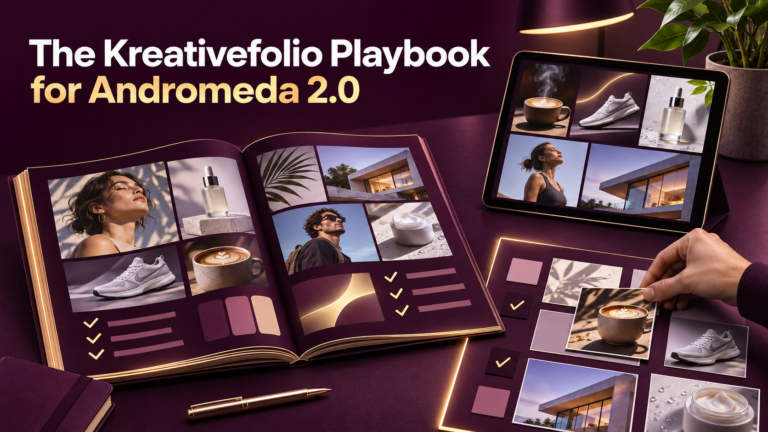
Here’s how we’re structuring Meta accounts for our clients now:
Consolidate the structure. Fewer campaigns, broad ad sets, Advantage+ where it fits. Let the algorithm search for buyers.
Brief by persona and pain point, not by format. Every creative batch starts with 4 to 6 distinct angles: the problem, the outcome, social proof, the offer, the founder story, the objection-killer. Each angle is then produced across formats.
Build a creative engine, not a campaign. We refresh concepts on a regular rhythm. Winners get new edits and formats, and losers get replaced with new ideas, not tweaks.
Mix production styles. We combine polished brand video, lo-fi UGC, motion graphics and static design, in Arabic and English.
Feed clean signals. Strong pixel and Conversions API setup, real conversion events and clear first-party data still decide what Andromeda learns from.
Measure by concept, not just by ad. We track which ideas win, so the next brief starts smarter.
Andromeda 2.0 doesn’t make advertising easier. It makes it more honest. The brands that win won’t be the ones with the cleverest audience hacks. They’ll be the ones with the clearest understanding of their customers, shown through creative that speaks to each of them.
The algorithm is now smart enough to find your customers. The question is whether your ads are good enough, and varied enough, to be worth finding.
Is your Meta account built for how the platform works today? At Kreativefolio, we help brands across the UAE, GCC, UK and Us rebuild their paid social around creative-led strategy